



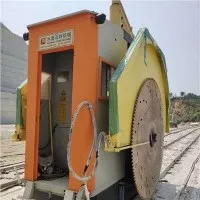
To ensure effective cleaning of the parts, it is crucial to thoroughly remove any residual foundry sand, rust, or chips. Pay particular attention to important components like the gantry cutting machine, where the inner cavity should be coated with anti-rust paint. Any oil stains, rust, or attached chips can be effectively cleaned using diesel, kerosene, or gasoline as a washing liquid. After cleaning, ensure the parts are thoroughly dried with compressed air.
Before mating or connecting, it is important to lubricate the mating surfaces in order to ensure smoother and more efficient function. This is especially crucial for the bearing parts in the headstock and the screw nut parts of the lifting mechanism. Proper lubrication enhances the longevity and durability of these components, reducing the risk of wear and damage over time. Take care to apply lubricant evenly and thoroughly in order to maximize the benefits of this simple yet important step.
To ensure proper assembly, it is essential that the matching parts are precisely sized and aligned. This necessitates the need to double-check or sample the matching size during assembly. Examples of such matching parts include the journal of the main shaft and the bearing, as well as the matching hole's diameter and center distance between the spindle box and the bearing. By paying close attention to the accuracy of matching parts, the overall performance and durability of the system can be significantly improved.
To assemble the wheel properly, it is important to ensure that the two-toothed wheel's axis lines are parallel to each other and in the same plane. Additionally, it is essential to maintain a standard tooth gap and keep the axial misalignment within ≤2MM. These requirements are crucial for the efficient functioning of the wheel. So, attention to detail is key when it comes to assembling this component.
Checking the joint surface of the joint is crucial to ensure its smoothness and absence of deformation. If there are any imperfections, it is essential to trim the surface and remove any burrs present. This will guarantee that the joint surface is in close contact with the adjoining parts, maintaining a flat and non-skewed profile.
When pressing the seal into the sealing groove, make sure to do so in a parallel manner. Avoid twisting and deforming the seal, as well as causing any damage or scratches to the sealing surface.
When assembling a pulley, it is important to ensure that the axes of the two pulleys are parallel and that the center of the pulley groove is positioned correctly. If the offset is too large, it can cause tension imbalance, leading to belt slippage and increased wear.
To avoid any issues during transmission, it is also crucial to select the appropriate V-belt and ensure that the length of the belt is the same. This helps to prevent any vibrations while the belt is in use. As such, taking these assembly requirements into careful consideration is key to ensuring optimal performance and longevity of the pulley.
Before the bearing is assembled, it is essential to ensure that it is clean. The anti-rust paint should be washed off before the assembly process begins. During the cleaning process, it is important to check for rust on the raceway and rolling elements and confirm that the rotation is flexible. To avoid any difficulties during assembly, applying a layer of lubricating oil to the matching parts is necessary to ensure ease of assembly.
If the pressure difference is too large during assembly, it is crucial to stop and conduct a thorough inspection. During the bearing assembly, the end of the model should face inward, and the direction should be towards the shaft shoulder. Beating the rolling elements evenly and symmetrically is crucial during assembly, but the process should be done gently to prevent damaging the bearing's end face. Finally, the installation's tilt should be avoided by ensuring that the end face is perpendicular to the shaft.
When it comes to threaded connections, it's important to use anti-loosening devices to ensure the stability of the connection. There are several common options to choose from, depending on the specific design requirements and conditions, such as double nut anti-loosening, spring washer anti-loosening, split pin anti-loosening, stop washer anti-loosening, round nut and flower cushion anti-loosening.
For symmetrical multi-bolt tightening, it's important to tighten in a symmetrical sequence to ensure even distribution of force. Similarly, when dealing with bar-shaped connectors, it's best to tighten symmetrically from the middle to both ends.
Lastly, it's important to make sure that the tail of the rib of the bolted connection protrudes from the nut to ensure a secure hold. Overall, by choosing the appropriate anti-loosening device and using proper tightening techniques, you can ensure a strong and reliable connection.
10. Check while assembling.
To ensure safe driving, pre-driving inspections are crucial. It is important to thoroughly check the assembly work to ensure its integrity, as well as test the accuracy and reliability of each connection. Moving parts should be checked for flexibility and the lubrication system should be tested for normal functioning. By completing these inspections, potential issues can be identified and resolved before hitting the road.
It is crucial to diligently monitor the startup process to ensure a job well done. As soon as the machine is activated, it is essential to carefully observe the key operating parameters and the functionality of the moving parts. These parameters include the speed and smoothness of the movement, the rotation of the main shaft, the pressure of the lubricating oil, the temperature, the vibration, and the noise levels. Only when these indicators are normal and stable during the initial startup phase should a trial operation be considered.